How do you use RSVP replies to plan the bar so you do not over order drinks?
Your guest list already answers most bar questions before you ask a single one. Here is how to turn adult headcount, event length, and one optional preference question into an order you can defend.
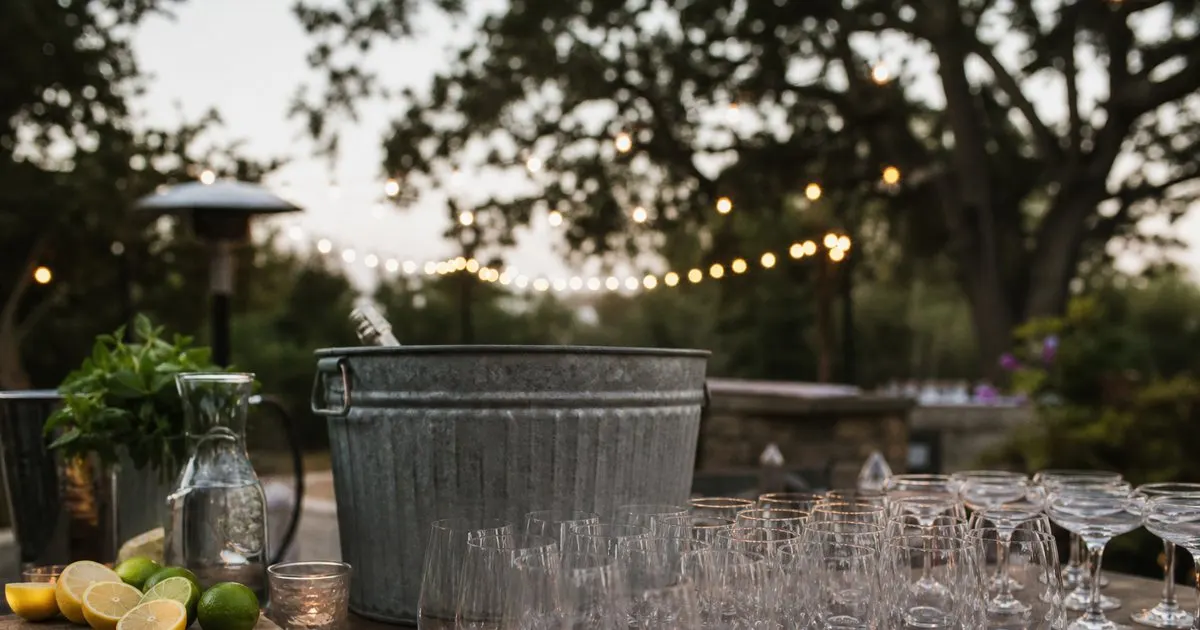
Start from the numbers your guest list already gives you
Before you think about brands or bottle counts, your RSVP export answers three questions that matter more: how many adults are attending, how many children, and how many hours the bar will be open. A household of five might contain two drinkers, so a raw headcount pushes your order up for no reason. If your form already captures a kids meal option or an age band, you have the adult and child split without any extra work. If it does not, that single field is the cheapest improvement you can make to next year's form. Related: How do you give your caterer an accurate final headcount without recounting guests all week?
Event shape changes consumption as much as headcount does. A seated dinner with a defined cocktail hour drinks differently from a standing reception where nobody ever puts a glass down, and an afternoon event typically runs lighter than an evening one. Planners commonly work from a rough assumption of about one drink per adult per hour, with the first hour running higher because arriving guests head straight for the bar. Treat that as a range rather than a number. Two people planning the same wedding will land in different places, and both can be right.
Keep reading: What is the easiest way to collect RSVPs and meal choices from every wedding guest at once?, How do you give your caterer an accurate final headcount without recounting guests all week?, How should an event host handle plus ones and whole families when collecting RSVPs online?. See how RsvpMealr helps you event rsvp and meal choice collection.
Only ask a drinks question if you will act on the answer
If you want preference data, add one optional question per adult guest and keep the choices broad: beer, wine, cocktails, non-alcoholic, no preference. That takes a guest three seconds and gives you something usable. Resist the temptation to ask about specific varietals, spirits, or bottle sizes. Most guests will not know how to answer, the ones who do will give you a wish list you cannot fill, and a longer form costs you replies on the fields you actually need, like meal choice and dietary notes. Related: What is the easiest way to collect RSVPs and meal choices from every wedding guest at once?
One question to avoid entirely is how many drinks a guest expects to have. Nobody answers that honestly, and it reads as scorekeeping before anyone has arrived. Read the answers you do get as a weighting of the total, not as a per-person promise. People switch from a cocktail to wine at dinner and back again. If half your guests skip the optional question, apply the split from the half who answered to everyone. A weighting drawn from real replies beats a guess, even an incomplete one. Related: What is the best way to collect dietary restrictions from guests without a dozen follow up messages?
Turning the split into an order you can actually place
The arithmetic is simple once the inputs are honest. Multiply adult guests by open bar hours to get your baseline drink count, add extra for the first hour, then apply your preference split across beer, wine, cocktails, and non-alcoholic. Convert each share into units your supplier sells: a standard bottle of wine pours roughly five glasses, cases and kegs come in fixed counts, and cocktails need a spirit plus mixers plus far more ice than most hosts expect. Ice is the item people underorder most often, especially for outdoor events in warm weather.
Before you finalize anything, ask the supplier what comes back. Many retailers accept unopened bottles returned within a set window, and that policy quietly decides your strategy. Order toward the top of your range on anything returnable and toward the bottom on anything you cannot send back, such as kegs, opened bottles, or batched cocktails made in advance. And confirm how the venue or caterer charges. If the bar is priced per head rather than per bottle consumed, your job shifts from counting units to negotiating which package the guest list justifies, and your RSVP counts are still the evidence you bring to that conversation. Related: How should an event host handle plus ones and whole families when collecting RSVPs online?
Give non-drinking guests a real count, not an afterthought
Non-alcoholic is not a rounding error at the bottom of the order. Designated drivers, guests who are pregnant, guests in recovery, people on medication, guests who simply do not drink, and everyone under twenty one are all in the room. Putting non-alcoholic in the same list of choices as beer and wine, rather than burying it in a comments box, means those guests get counted properly and nobody has to write an explanation on an RSVP form to justify their answer.
Plan a full drink per hour for non-drinking adults too, because they are not drinking less, they are drinking something else. Still and sparkling water disappear faster than almost anyone forecasts, particularly outdoors in summer. One or two prepared non-alcoholic options served in the same glassware as the cocktails costs very little and changes the experience completely, since nobody is standing at a reception holding a plastic cup of soda while everyone around them has stemware. For children, use the kids meal count from your RSVP data and plan juice and water against that number.
- Split adults from children in your RSVP export before you calculate anything; a raw headcount inflates the order.
- Ask one broad, optional drink preference question and use the answers as a weighting, never as a per-person order.
- Ask your supplier's return policy first, then order high on returnable stock and low on anything you cannot send back.
- Count non-alcoholic guests at a full drink per hour and serve those options in the same glassware as everything else.

Julien Jimenez
Julien Jimenez is an independent software builder based in Paris. He designs, ships, and operates focused SaaS products for small businesses and independent professionals. Read the full author page.
RSVPs and meals, neatly counted
Event RSVP and meal choice collection. RsvpMealr is built to help you put this into practice.
Start collecting RSVPsMore from the RsvpMealr blog

Get the RsvpMealr playbook
Practical guides on event guest management, straight to your inbox as we publish them. No spam, unsubscribe any time.