Why does adding a kids meal option to your RSVP form matter for both budget and guest experience?
Children eat differently, cost differently, and are counted differently by caterers. Collecting that on the RSVP form up front saves money and avoids unhappy tables.
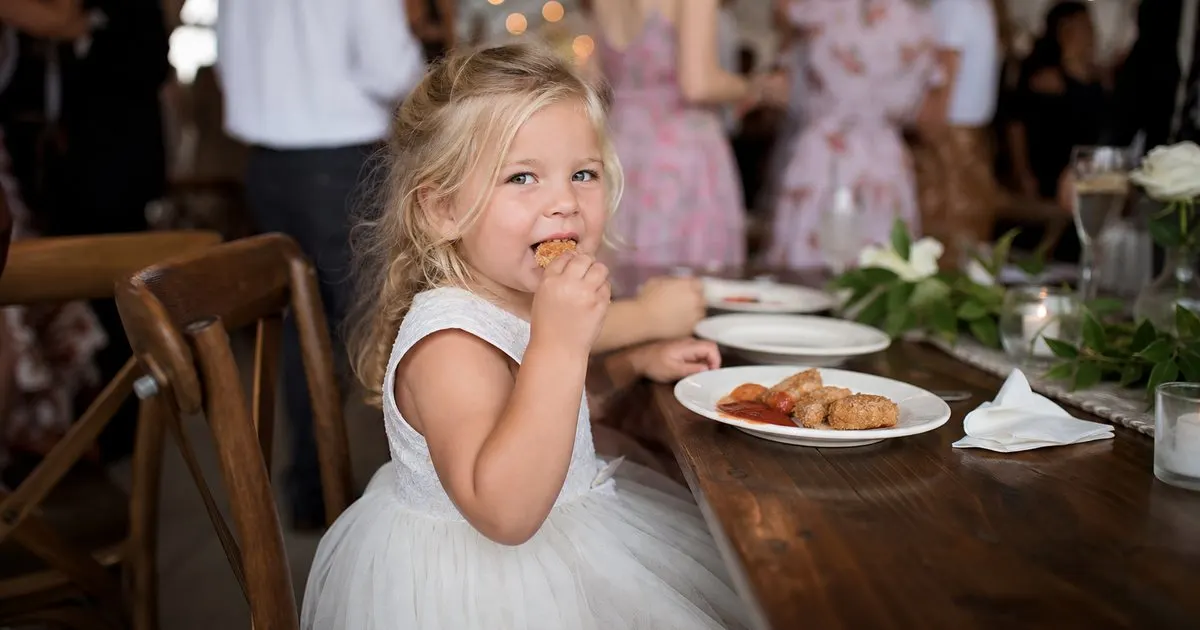
Caterers price and prepare children's plates differently
Almost every caterer offers a children's plate at a lower cost than the adult entree, and most define a child by an age cutoff written into the contract. If your RSVP form does not distinguish children from adults, every kid becomes a full price adult meal on the invoice, and the kitchen plates a salmon fillet for a four year old who wanted pasta. Neither outcome is what you paid for. Related: What is the easiest way to collect RSVPs and meal choices from every wedding guest at once?
There is also a portioning and timing difference. Kids' plates are often served first so parents can settle children before their own food arrives, and the kitchen needs to know how many to fire. A number gathered the week of the event by texting parents is always less accurate than a number gathered on the form, because parents forget to mention the second child or assume the toddler will share.
Keep reading: What is the easiest way to collect RSVPs and meal choices from every wedding guest at once?, How do you give your caterer an accurate final headcount without recounting guests all week?, How should an event host handle plus ones and whole families when collecting RSVPs online?. See how RsvpMealr helps you event rsvp and meal choice collection.
What the form should actually ask
Keep it simple. For each guest in a party, ask whether they are an adult or a child, and for children capture an approximate age bracket if your caterer's cutoff or your seating depends on it. Then show a separate meal question for children with the kids menu options rather than the adult list. A long adult menu shown to a parent choosing for a toddler produces guesses, not choices.
Add one optional field for high chairs or booster seats, since the venue or rental company needs that count and it is otherwise impossible to gather without calling every family. If infants who will not eat are welcome, let parents mark them as attending with no meal, so your headcount for seating and your headcount for the kitchen are both right without a side conversation. Related: How do you give your caterer an accurate final headcount without recounting guests all week?
The invitation wording does the heavy lifting
Whether children are invited at all is a decision that belongs on the invitation, not on the form. If the event is adults only, say so gracefully on the invitation and make the form accept only the named adults. If children are welcome, list them by name on the envelope or in the online invitation so parents know the invitation extends to them and there is no guesswork about the baby. Related: How can a host gently chase guests who have not replied to an event invitation yet?
Where children are welcome for some parties but not others (immediate family only, for example), the online form should show child slots only to the households you have marked. That is one of the quieter benefits of collecting replies through software rather than a general link: the form a guest sees can already reflect the decision you made, which removes the awkward moment of a parent adding a child who was not invited. Related: How should an event host handle plus ones and whole families when collecting RSVPs online?
Using the numbers once you have them
With children counted separately, the catering invoice matches reality, and you can decide on kids-specific extras with real numbers: a small activity table, a separate dessert, an early plated service. You can also place children deliberately on the seating chart, either at a kids table with a sitter or next to their parents with a high chair, because you know which families are bringing whom.
Share the child count with the venue and the photographer too. Venues sometimes need it for capacity or safety rules, and photographers plan family group shots differently when they know how many small children will be present. The count you collected on a form in one evening becomes useful to four different vendors, which is the kind of return on a single form field that makes it worth adding.
- Caterers usually price children's plates lower and set an age cutoff, so uncounted kids become overpriced adult meals.
- Ask adult or child per guest, show a separate kids menu, and add an optional high chair field.
- Decide on the invitation whether children are invited, then let the form reflect that decision per household.
- A separate child count feeds the caterer, venue, seating plan, and photographer from one form.

Julien Jimenez
Julien Jimenez is an independent software builder based in Paris. He designs, ships, and operates focused SaaS products for small businesses and independent professionals. Read the full author page.
RSVPs and meals, neatly counted
Event RSVP and meal choice collection. RsvpMealr is built to help you put this into practice.
Start collecting RSVPsMore from the RsvpMealr blog


Get the RsvpMealr playbook
Practical guides on event guest management, straight to your inbox as we publish them. No spam, unsubscribe any time.